

License:

MGA/B2B/743/2019
MGA/B2C/879/2021



Malta – September 2026 —
As iGaming businesses manage an increasing number of payment gateways, maintaining flexibility across different payment arrangements has become an important part of daily platform operations. Different gateways may operate under different commercial structures, transaction requirements, and settlement arrangements, making a single fixed configuration approach less practical for merchants managing multiple payment channels.
Payment configuration is therefore becoming more than a technical setup. The ability to adjust individual gateway settings according to operational requirements can give merchants greater control over how transactions are handled and how payment experiences are presented to users.
When user-received amounts are managed through fixed settings, merchants may face limitations when adapting their payment configuration to different gateway arrangements. This can make it more difficult to maintain consistent operational rules across payment channels while responding to specific business requirements.
To provide greater flexibility in this area, TNet, a platform solution under Titan Group, introduces an enhancement to its Third Party Payment Platform with the User Received Percentage configuration option.
Payment gateways can differ significantly in how they are structured and managed. Merchants may work with multiple providers to support different markets, payment methods, transaction requirements, or business arrangements.
While having multiple gateways can provide greater payment coverage, it can also introduce additional configuration requirements.
A fixed approach to user-received amounts may not always be suitable for every gateway. Merchants may need to apply different settings depending on the specific payment arrangement associated with each channel.
Without flexible configuration options, operational teams may have fewer tools available to adapt payment settings efficiently.
This makes gateway-level control an important consideration for businesses looking to manage a more diverse payment environment.
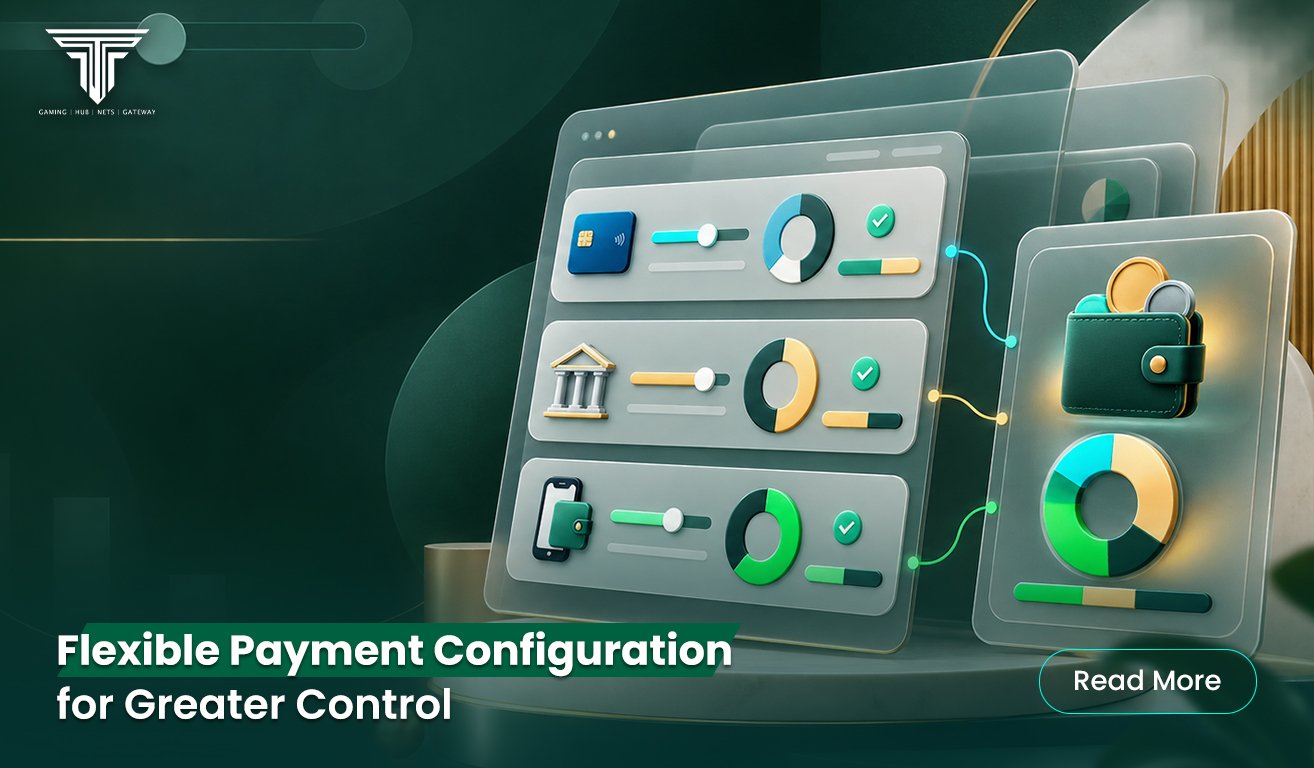
The latest TNet enhancement introduces User Received Percentage, allowing merchants to configure the percentage of an approved deposit amount that users receive for each payment gateway.
Instead of applying a single setting across all gateways, merchants can define the User Received Percentage according to the requirements of individual payment channels.
This provides a more flexible approach to managing third-party payment configurations while giving merchants greater control over how payment arrangements are handled within the platform.
The enhancement is designed to support businesses that need to manage different gateway configurations without relying on a uniform setting for every payment channel.
The ability to configure settings at the individual payment gateway level can provide merchants with greater operational flexibility.
Different payment gateways may have different cost structures, processing arrangements, or business requirements. Being able to configure the User Received Percentage separately allows merchants to reflect these differences within their platform settings.
This can help operators:
· Configure payment settings according to individual gateway requirements
· Apply different User Received Percentages across payment channels
· Maintain greater control over approved deposit configurations
· Adapt payment arrangements to changing business needs
· Manage multiple third-party gateways more efficiently
This type of flexibility can become increasingly valuable as businesses expand their payment coverage and introduce additional transaction channels.
Managing multiple payment gateways can create additional operational work when every configuration change requires a broader system adjustment.
Gateway-specific configuration helps reduce this dependency by giving merchants more direct control over individual payment settings.
For operational teams, this can make it easier to review and adjust payment configurations according to specific business requirements.
It also creates a clearer relationship between each gateway and its corresponding settings, allowing merchants to manage their payment environment in a more structured way.
As payment operations become more complex, this level of control can contribute to a more efficient approach to day-to-day platform management.
There is no universal payment configuration that works equally well for every merchant or every payment gateway.
Businesses may have different market strategies, transaction models, and commercial arrangements. These differences can influence how individual payment channels need to be configured.
By allowing User Received Percentage to be managed at the gateway level, TNet provides merchants with an additional configuration layer that can be adapted to these operational differences.
This allows payment settings to evolve alongside business requirements rather than remaining tied to a fixed structure.
For merchants operating across multiple payment channels, this flexibility can help create a more adaptable payment management environment.
Payment configuration can have a direct relationship with how merchants manage their transaction operations.
When settings are clearly defined and configurable, operational teams have greater visibility into how different payment gateways are structured within the platform.
The User Received Percentage enhancement provides another level of control by allowing merchants to define gateway-specific settings rather than applying the same approach across every payment channel.
This can help businesses maintain clearer internal processes and reduce the operational limitations associated with fixed payment configurations.
As iGaming businesses grow, payment infrastructure often becomes more complex. New gateways may be added to support additional markets, payment methods, or transaction requirements.
A scalable platform therefore needs to support not only more payment channels, but also greater configuration flexibility across those channels.
TNet’s enhancement reflects this approach by allowing merchants to manage User Received Percentage settings individually for each payment gateway.
This provides a more scalable configuration model that can accommodate different payment arrangements without requiring merchants to treat every gateway identically.
Payment management is increasingly becoming an area where operational flexibility can provide meaningful business value.
The ability to configure individual payment gateways according to their specific requirements allows merchants to respond more efficiently to changing payment arrangements while maintaining greater control over platform operations.
Rather than relying on a fixed configuration model, businesses can adopt a more flexible approach that reflects the differences between payment channels.
This can help create a payment environment that is easier to manage, adjust, and scale as business requirements evolve.
As iGaming merchants continue to work with increasingly diverse payment ecosystems, flexible configuration will remain an important part of effective platform management.
TNet’s User Received Percentage enhancement gives merchants greater control over how approved deposits are configured across individual payment gateways.
By providing gateway-level flexibility, the feature supports more adaptable payment management and allows businesses to align their configurations with different operational requirements.
For merchants managing multiple third-party payment arrangements, greater control over individual gateway settings can provide a more practical foundation for efficient and scalable payment operations.
TNet is a platform solution under Titan Group, designed to help iGaming operators and merchants manage promotions, payments, rewards, player operations, and platform configurations through flexible system tools. With a focus on operational control, automation, and adaptability, TNet provides configurable solutions that help businesses respond to different requirements while improving efficiency across their day-to-day platform operations.
MGA/B2B/743/2019
MGA/B2C/879/2021