

License:

MGA/B2B/743/2019
MGA/B2C/879/2021



Malta – September 2026 —
As iGaming operators continue to expand their game portfolios, access to a wider range of game providers has become an important part of maintaining content variety and competitiveness. However, while adding more providers can create greater content opportunities, it can also introduce additional operational complexity.
Managing individual integrations, commercial arrangements, technical requirements, and support channels for every provider can require significant resources. As the number of providers increases, these responsibilities can become increasingly difficult to coordinate, potentially slowing down the process of bringing new content into an operator’s platform.
For businesses looking to expand their game ecosystem efficiently, the challenge is therefore not simply gaining access to more content. It is also about finding a more streamlined way to manage the providers behind that content.
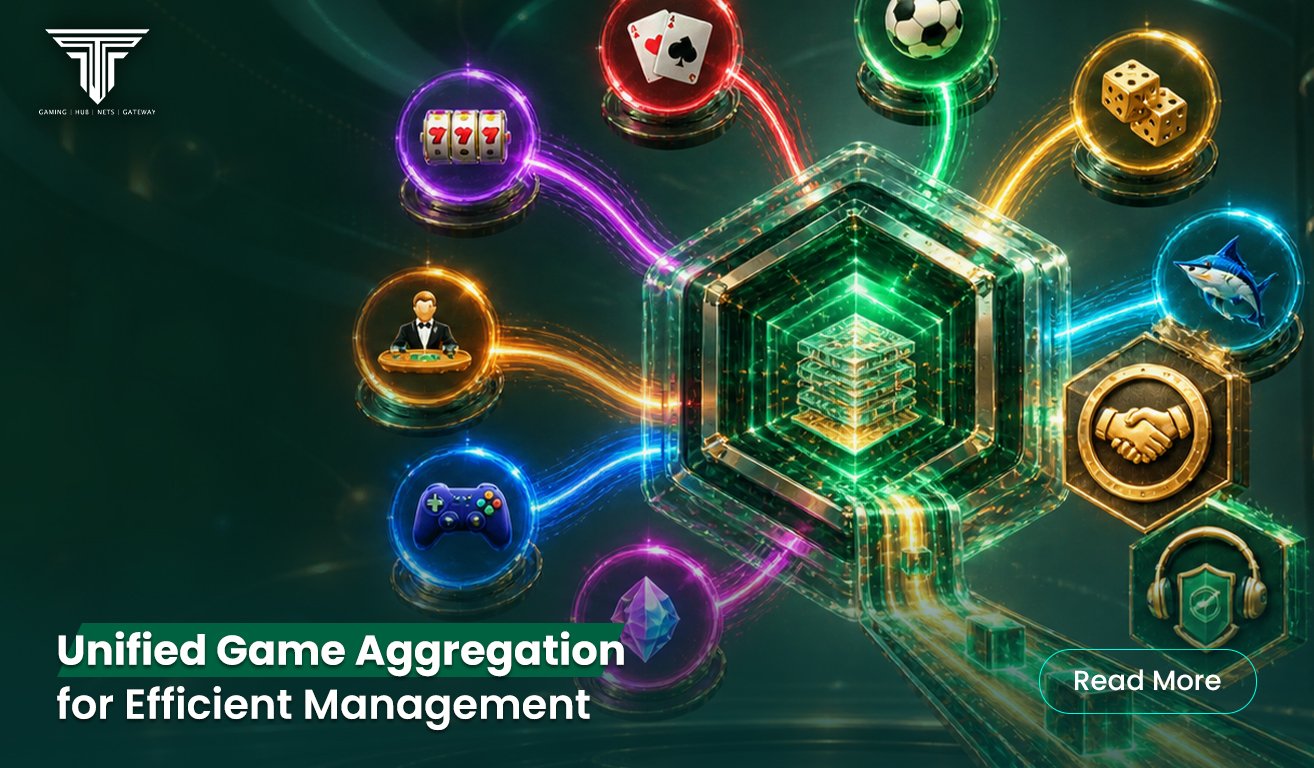
To address this challenge, THub, Titan Group’s unified game aggregation platform, provides operators with access to 100+ premium game providers through a single integration, helping simplify the technical and operational processes involved in multi-provider game management.
Working with multiple game providers can provide operators with a broader selection of content, but every additional provider may also introduce another layer of operational requirements.
Traditionally, operators may need to manage separate API integrations, provider relationships, technical support processes, and commercial arrangements.
As portfolios grow, this model can create several challenges:
· Increasing integration and maintenance requirements
· More provider relationships to coordinate
· Multiple technical support channels
· Longer onboarding processes for new providers
· Greater operational workload across teams
These challenges can become particularly significant for operators managing large portfolios or expanding across multiple markets.
The ability to consolidate provider connectivity can therefore play an important role in creating a more efficient game management structure.
THub is designed to simplify access to multiple game providers through a unified integration model.
Instead of developing and maintaining separate integrations for each provider, operators can connect with multiple providers through a single API structure.
This reduces the technical complexity associated with expanding a game portfolio while providing a more streamlined foundation for content management.
With access to 100+ premium game providers, THub gives operators the ability to expand their content ecosystem without requiring the same level of individual integration management for every provider.
One of the main advantages of game aggregation is reducing the technical workload associated with multiple provider connections.
Each individual integration can require development resources, testing, maintenance, and ongoing technical monitoring. As more providers are added, these requirements can accumulate quickly.
A unified integration approach allows operators to centralise provider connectivity through one platform.
This can help technical teams:
· Reduce the number of individual integrations to maintain
· Simplify technical onboarding
· Streamline ongoing integration management
· Allocate development resources more efficiently
· Support faster access to additional game content
For operators focused on growth, reducing technical overhead can allow internal resources to focus more on platform optimisation and business development rather than repetitive integration tasks.
Multi-provider operations are not limited to technical considerations. Commercial coordination can also become increasingly complex as operators work with a growing number of providers.
Managing multiple provider relationships may involve separate commercial arrangements, communication channels, and operational coordination.
THub provides a more consolidated approach by bringing multiple providers into a unified aggregation ecosystem.
This can help reduce the complexity associated with managing a large network of individual provider relationships, allowing operators to work through a more structured framework.
A simplified commercial arrangement can also make it easier for businesses to manage portfolio expansion as new providers and content are introduced.
Technical issues and integration questions are a normal part of managing a large gaming ecosystem. However, coordinating support across numerous individual providers can place additional pressure on operational and technical teams.
Different providers may have different support processes, response structures, and communication channels.
Through a unified aggregation model, THub helps reduce the need for operators to coordinate independently with every provider for day-to-day support requirements.
Having a centralised support point can make issue management more organised while reducing the operational effort required to coordinate across multiple external teams.
The value of aggregation also extends to content deployment.
When every new provider requires a separate integration process, onboarding new content can take additional time and technical resources. This can limit how quickly operators respond to new market trends or player demand.
By providing a unified connection to multiple providers, THub helps streamline the process of bringing additional game content into an operator’s platform.
Faster access can support more agile content strategies and allow operators to refresh their game libraries more efficiently.
This is particularly valuable in a market where game variety and regular content updates are increasingly important for maintaining a competitive platform.
A broader game portfolio can provide operators with more opportunities to serve different player preferences.
However, portfolio expansion needs to be supported by infrastructure that can scale alongside the number of providers and titles being added.
THub’s aggregation model provides operators with a foundation for expanding their content ecosystem while reducing the operational burden associated with managing individual integrations.
This makes it easier for businesses to think beyond short-term content additions and develop a longer-term strategy for game portfolio growth.
Game aggregation is no longer simply about providing access to more titles. For modern operators, the efficiency of the ecosystem behind the content is equally important.
A unified platform can help connect providers, simplify integration management, reduce support complexity, and improve access to new content.
By bringing these functions together, THub enables operators to focus more on how they use and optimise their game portfolio rather than spending excessive resources managing the infrastructure behind every individual provider.
This creates a more streamlined approach to game ecosystem management.
The larger an operator’s game portfolio becomes, the more important efficient provider management can be.
Managing ten providers and managing more than one hundred providers can involve very different levels of operational complexity when each relationship requires separate systems and processes.
A unified aggregation model provides a more scalable alternative by allowing additional providers to be managed within a consolidated ecosystem.
This can help operators expand their game offerings while maintaining greater operational efficiency.
As the iGaming industry continues to evolve, operators will likely continue looking for ways to increase content variety without allowing operational complexity to grow at the same pace.
THub addresses this requirement by combining access to 100+ premium game providers with a unified integration and management approach.
By simplifying provider connectivity, commercial coordination, and support management, THub helps operators create a more efficient framework for expanding their gaming ecosystem.
More content can create more opportunities, but the infrastructure used to manage that content determines how efficiently those opportunities can be realised.
THub is Titan Group’s unified game aggregation platform, designed to help iGaming operators connect with and manage content from 100+ premium game providers through a streamlined ecosystem. By reducing integration complexity and consolidating provider access, commercial coordination, and support processes, THub helps operators expand their game portfolios more efficiently while building a scalable foundation for long-term platform growth.
MGA/B2B/743/2019
MGA/B2C/879/2021